Have you ever felt your heart race when you were scared? That is your body trying to keep you safe. Scientists call this the Fight Flight Freeze Fawn response. It is like a built-in alarm system in your brain. When you sense danger, your brain decides in a split second how to react. For a long time, people only talked about fighting or running away. Now, we know there are more ways our bodies handle stress. Understanding the fight flight freeze fawn meaning helps us be kinder to ourselves. It shows that our reactions are not “wrong” or “weak.” Instead, they are smart ways our nervous system tries to survive a hard situation.
The Four Main Trauma Responses Explained
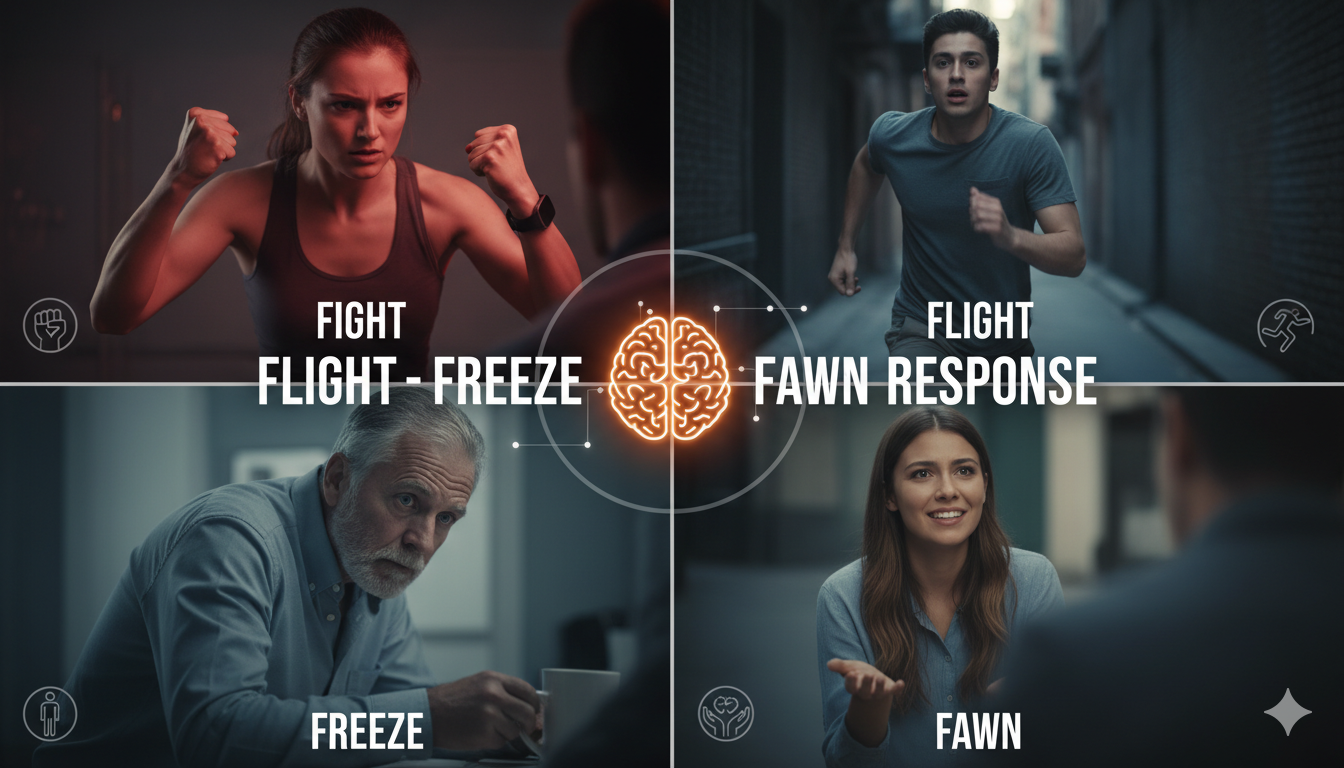
When we talk about trauma responses fight flight freeze fawn, we are looking at survival tools. The “Fight” response makes you want to stand your ground and be aggressive. “Flight” is the urge to run away from the threat as fast as you can. “Freeze” happens when you feel stuck or unable to move, like a deer in headlights. Finally, “Fawn” is when you try to please the person hurting you to stay safe. Every trauma response fight flight freeze fawn uses is a natural instinct. You do not choose which one happens; your brain chooses for you based on the environment. Learning about these helps people heal from past scary experiences.
Looking at the Fight Flight Freeze Fawn Chart
A fight flight freeze fawn chart is a great way to see how these feelings look in real life. In the “Fight” section, you might see words like “anger” or “tight fists.” The “Flight” section might list “anxiety” or “avoidance.” When you look at a fight flight freeze fawn diagram, it maps out these physical and emotional changes. It helps you identify which state you are in during a stressful moment. Many people find that they have a “favorite” response they use most often. By using a chart, you can start to notice your patterns. This is the first step toward feeling more in control of your daily life and emotions.
New Additions: Fight Flight Freeze Fawn Flop Fatigue
As we learn more about stress, experts have added new categories. You might hear about the fight flight freeze fawn flop or even fight flight freeze fawn flop fatigue. The “Flop” response is when a person completely shuts down or faints. It is like your body is playing dead because it cannot fight or run. This often leads to extreme tiredness, which is why we mention fatigue. When your body stays on high alert for too long, it gets worn out. This stress response fight flight freeze fawn cycle can make you feel sleepy all day. Understanding these extra stages helps explain why you might feel exhausted after a small argument or a long day at work.
How to Use a Fight Flight Freeze Fawn Worksheet
Many therapists give out a fight flight freeze fawn worksheet to help patients. This tool asks you questions about how your body feels when you are upset. Do you get sweaty palms? Do you start apologizing for things that are not your fault? Using a fight flight freeze fawn worksheet pdf allows you to track these moments over time. It turns a scary feeling into something you can study and understand. Writing things down makes the big feelings feel a little smaller and easier to handle. If you want to try this at home, you can easily find a fight flight freeze fawn pdf online to print out and use whenever you feel overwhelmed.
Taking a Fight Flight Freeze Fawn Quiz or Test
If you are curious about your style, you can take a fight flight freeze fawn test. These are usually short sets of questions about your behavior in stressful times. A fight flight freeze fawn quiz might ask, “When someone yells at you, do you yell back or stay quiet?” There are no wrong answers on these tests. The goal is simply to learn more about your unique nervous system. Knowing if you are a “fawner” or a “freezer” helps you find the right ways to calm down. While an online quiz is not a medical diagnosis, it is a fun and helpful way to start your journey of self-discovery.
Why Does the Stress Response Fight Flight Freeze Fawn Happen?
Every stress response fight flight freeze fawn creates is controlled by the amygdala. This is a tiny part of your brain that acts like a smoke detector. When it “smells” danger, it sends signals to the rest of your body. This causes your heart to pump blood faster to your muscles. It also shuts down the parts of your brain used for logic and math. This is why it is hard to think clearly when you are very upset. Even the fight flight freeze fawn nyt (New York Times) articles discuss how modern stress triggers these ancient instincts. Your brain might react to a mean email the same way it would react to a tiger!
The Difference Between Fight and Flight
The “Fight” and “Flight” reactions are the most active versions of the fight flight freeze fawn system. Fight is about power and boundaries. It might look like a toddler having a tantrum or an adult getting very defensive. Flight is about distance and safety. It might look like someone leaving a room suddenly or constantly staying busy to avoid feelings. Both of these require a lot of energy and “adrenaline.” Adrenaline is a chemical that gives you a burst of strength. While these responses are helpful in a real emergency, they can be tiring if they happen every day at school or your job.
Understanding the Freeze and Fawn Responses
Freeze and Fawn are quieter but just as important in the fight flight freeze fawn group. Freezing is a way to “hide” in plain sight. If you don’t move, maybe the danger will go away. Fawning is a social survival skill. It involves being “too nice” or ignoring your own needs to keep others happy. People who fawn often grew up in homes where they had to be perfect to avoid trouble. Recognizing the fight flight freeze fawn meaning in your own life can be eye-opening. It helps you see that being a “people pleaser” might actually be a way your body is trying to stay safe from conflict.
How to Calm Your Nervous System
Once you know you are in a fight flight freeze fawn state, you can work to calm down. Deep breathing is one of the best ways to tell your brain you are safe. You can also try “grounding,” which is noticing things around you. Find five things you can see and four things you can touch. This brings your mind back to the present moment. Using a fight flight freeze fawn diagram can also help you visualize moving from a “scared” state to a “calm” state. Taking small steps every day makes your internal alarm system less sensitive. You deserve to feel peaceful and relaxed in your own body.
Biography Table: Understanding the Response
| Feature | Description |
|---|---|
| System Name | Fight-Flight-Freeze-Fawn |
| Control Center | The Amygdala (Brain’s Alarm) |
| Main Purpose | Immediate physical survival and safety |
| Physical Signs | Rapid heart rate, shallow breathing, muscle tension |
| Common Triggers | Fear, loud noises, conflict, or past trauma |
| Tools for Help | Charts, worksheets, and grounding exercises |
Frequently Asked Questions
What is the most common trauma response?
There is no single “most common” response. Most people use different ones depending on the situation. However, many people find they lean toward one more than others as they grow up.
Can I change my fight flight freeze fawn response?
Yes! While these are instincts, you can train your brain to feel safer. With practice and sometimes therapy, you can learn to stay calm even when things get stressful.
Is fawning the same as being nice?
Not exactly. Being nice comes from a place of kindness. Fawning comes from a place of fear. It happens when you feel you must be nice to avoid being hurt or rejected.
Where can I find a fight flight freeze fawn worksheet pdf?
Many mental health websites offer a fight flight freeze fawn worksheet for free. These are great for kids and adults to use together to talk about big feelings.
Why do I feel tired after being stressed?
This is often called fight flight freeze fawn flop fatigue. Your body uses a lot of energy to stay alert. When the “danger” passes, your body crashes so it can recover.
Is the “Freeze” response bad?
No, none of these responses are bad. The freeze response is a very effective way to survive when you cannot run or fight back. It is a sign that your body is doing its best to protect you.
Conclusion
Understanding the fight flight freeze fawn response is like getting a manual for your own brain. It teaches us that our reactions to stress are normal and helpful survival tools. Whether you fight, run, freeze, or fawn, your body is simply trying its best to keep you safe. By using a fight flight freeze fawn chart or filling out a fight flight freeze fawn worksheet, you can learn to manage these big emotions. Remember, you are not broken; you are just human. Take a deep breath, be kind to yourself, and keep learning about how amazing your body really is!