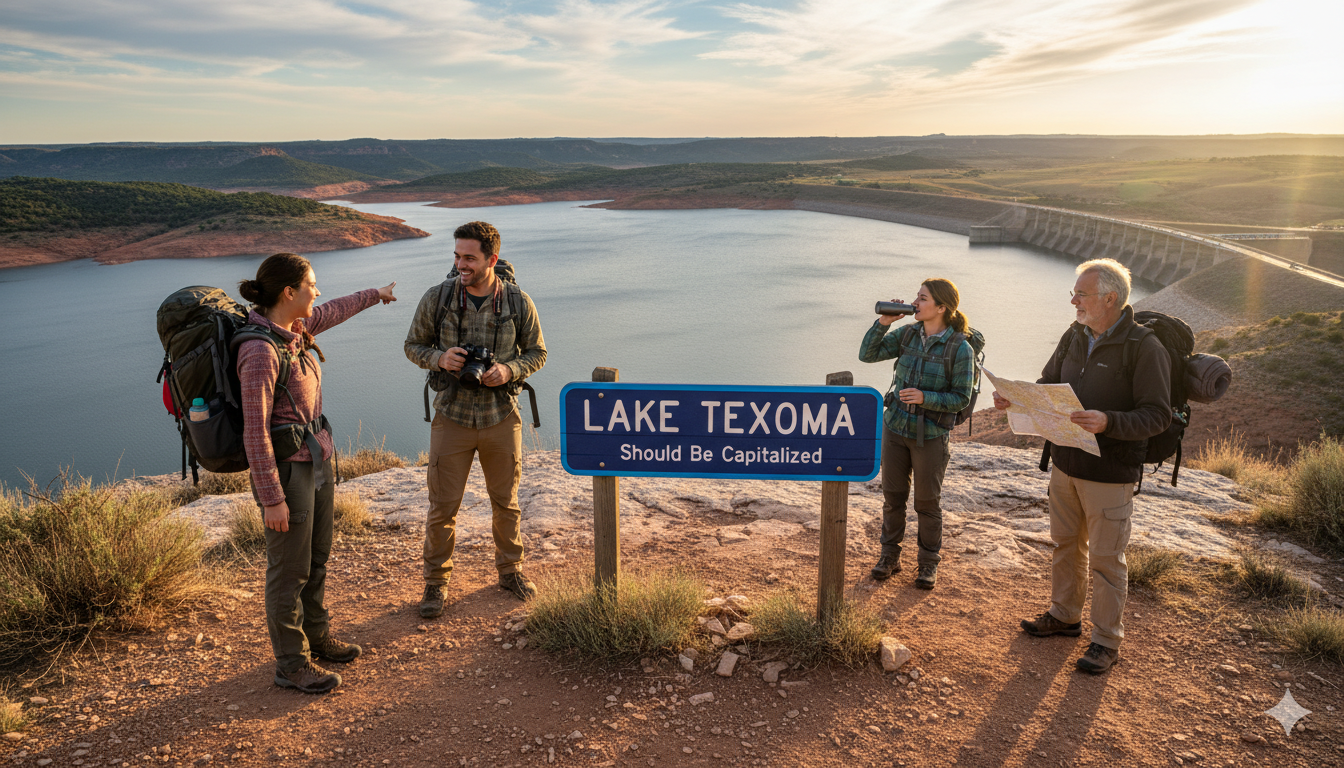
Have you ever sat down to write a thank-you note after a great weekend trip and paused at your keyboard? You might wonder if you should write “lake texoma” or “Lake Texoma.” It is a common question for many writers, students, and travelers. The short answer is simple: Lake Texoma Should Be Capitalized because it is a specific, named place.
When we talk about any old lake in the woods, we use lowercase letters. However, when we give that lake a name, it becomes a proper noun. Just like your own name starts with a big letter, the names of famous landmarks do too! In this article, we will dive deep into why Lake Texoma should be capitalized, explore the history of this massive reservoir, and even look at the fish that make it famous.
Why Lake Texoma Should Be Capitalized Every Time
In the world of English grammar, names matter. A proper noun refers to a specific person, place, or thing. Since there is only one Lake Texoma sitting on the border of Texas and Oklahoma, it earned its “Big Letters.” If you just say, “I am going to the lake,” you don’t need a capital “L.” But the moment you add “Texoma,” the rule changes. Lake Texoma Should Be Capitalized because the word “Lake” is now part of its official title. Think of it like a person’s title, such as “Captain America” or “Doctor Smith.” You wouldn’t use small letters for those, right?
Understanding Proper Nouns and Geographical Names
Geographical names can be tricky for some. However, the rule is quite steady. Whether you are writing about the Mississippi River or the Rocky Mountains, the specific name and the type of landform both get capitalized. This is why Lake Texoma should be capitalized in every sentence you write. It helps the reader know exactly which body of water you are talking about. Without those capital letters, the words look like a general description rather than a famous destination. Following this rule shows that you have a great handle on professional writing and clear communication.
The History of the Denison Dam
To understand the lake, we have to look at how it started. In the late 1930s, the United States government decided to tame the Red River. They built the Denison Dam to help stop flooding and create electricity. This was a huge project during World War II! Interestingly, German prisoners of war actually helped clear the land where the water now sits. Because this project was so important to the region, it was given a grand name. Since then, experts have agreed that Lake Texoma should be capitalized to show respect for its history and its role as a vital piece of American infrastructure.
A Detailed Look: Lake Texoma Biography Table
| Feature | Details |
| Official Name | Lake Texoma |
| Location | Border of Texas and Oklahoma |
| Created By | Denison Dam (Red River) |
| Year Completed | 1944 |
| Surface Area | Approximately 89,000 acres |
| Shoreline Length | Over 580 miles |
| Main Purpose | Flood control, Hydropower, Recreation |
| Annual Visitors | 6 Million+ |
| Nickname | Striper Capital of the World |
Is it a Lake or a Reservoir?
Technically, Lake Texoma is a man-made reservoir. However, people rarely call it “Reservoir Texoma.” We call it a lake because that is how it functions for the millions of people who visit each year. Even in technical documents, you will see that Lake Texoma should be capitalized regardless of whether it is called a lake or a reservoir. It is the second-largest lake in the state of Oklahoma and one of the biggest in the entire country. This massive size is one reason why it is such a popular spot for boaters and families looking for summer fun.
The Famous Striped Bass of Texoma
If you like fishing, you probably already know this name. Lake Texoma is world-famous for its striped bass. In most lakes, these fish cannot have babies on their own because they need saltier water. But because the Red River has natural salt deposits, the “stripers” can reproduce here naturally! This makes the lake a “bucket list” spot for anglers. When you are writing your fishing blog or posting a photo of your big catch, remember that Lake Texoma should be capitalized to make your post look expert and polished.
Fun Activities for Families at the Lake
There is so much more to do than just fish. You can go sailing, hiking, or even camping on the many islands. Treasure Island and Wood Island are two popular spots where people anchor their boats for a day of swimming. Because these islands are part of the park system, they are well-cared for. When planning your trip, you might see signs for “Eisenhower State Park.” Notice how those words are also capitalized? Just like Lake Texoma should be capitalized, all the parks and landmarks around it follow the same grammar rules.
Common Mistakes to Avoid When Writing
Many people make the mistake of only capitalizing “Texoma.” They might write “the Texoma lake.” While “Texoma” is definitely the name, the word “Lake” is officially part of the title on every map. To be 100% correct, Lake Texoma should be capitalized as a full phrase. Another common error is using lowercase when referring back to it. For example, if you say, “I love the Lake,” and you are clearly talking about Texoma, many style guides still suggest using the capital “L” to show you are referring to the specific proper noun mentioned before.
Respecting the Wildlife and Environment
The lake isn’t just for humans; it’s a home for birds, deer, and many types of fish. The Hagerman National Wildlife Refuge sits on the Texas side and provides a safe place for migratory birds. Protecting this area is a big job for the community. When we teach kids about conservation, we also teach them the names of these places. Explaining why Lake Texoma should be capitalized is a great way to start a lesson on geography and the environment. It gives the lake a “personality” and reminds us that it is a special place that deserves our care.
Conclusion: Why the Little Details Matter
Whether you are a student writing an essay or a traveler sharing your story, using correct grammar makes a big difference. We have learned today that Lake Texoma should be capitalized because it is a proper noun, a historical landmark, and a specific destination. By using the right letters, you show respect for the area and the people who work hard to maintain it. Next time you head out to the “Playground of the Southwest,” you’ll know exactly how to write about it in your travel journal!
Frequently Asked Questions (FAQs)
1. Is “Lake Texoma” a proper noun?
Yes, it is! A proper noun is a specific name for a person, place, or thing. Since it refers to a specific body of water, Lake Texoma should be capitalized.
2. Should I capitalize “lake” when it is not with the name?
No. If you are just saying, “We went to the lake,” you use a lowercase “l.” You only use a capital letter when you use the full name, Lake Texoma.
3. Why do some people write it in lowercase?
Most people who do this are just writing quickly or don’t know the grammar rules. However, for professional writing and schoolwork, Lake Texoma should be capitalized.
4. Does this rule apply to other lakes too?
Absolutely. The same rule applies to Lake Michigan, Lake Tahoe, and even small ponds if they have an official name.
5. Is Lake Texoma in Texas or Oklahoma?
It is actually in both! It sits right on the border. About 80% of the lake is in Oklahoma, but it is a major destination for people in both states.
6. What is the most famous fish in Lake Texoma?
The Striped Bass is the star of the show. Because they can spawn naturally there, the lake is known as the “Striper Capital of the World.”